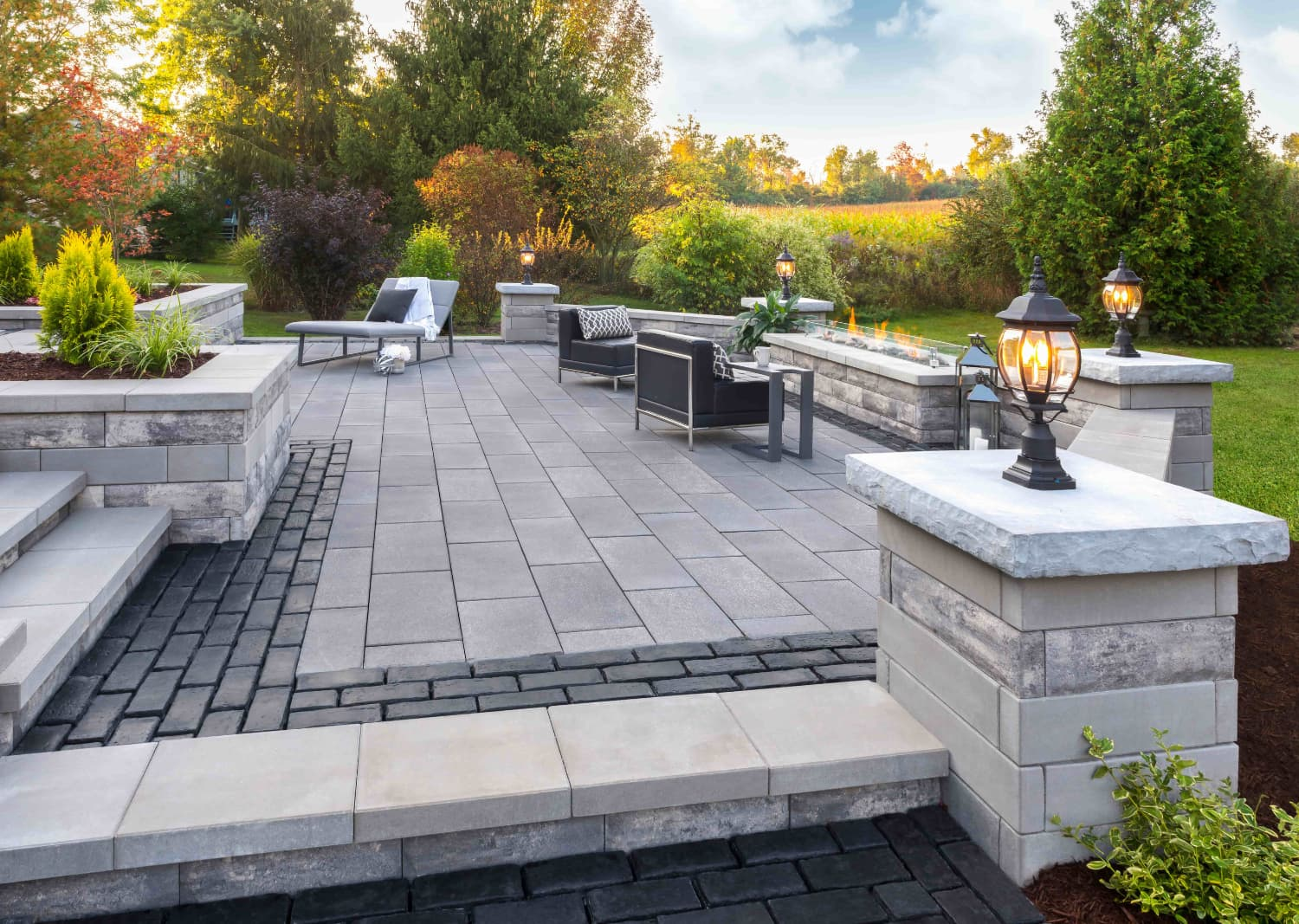
Which Patio Is Right for You: Concrete, Natural Stone, or Pavers?
Your Dream Patio Starts With The Right Materials

The right material can make all the difference in building an outdoor space you truly love. It not only sets the look of your patio, walkway, or fire pit but the material also impacts performance, upkeep, and cost.
Concrete
Concrete is a great choice for homeowners seeking a clean, simple, and cost effective option for patios, driveways, or walkways. It’s especially well suited for large, open areas where intricate design details aren’t the main focus.
What Is Concrete?
Concrete is a man-made building material made from cement, sand, gravel, and water that hardens into a strong, solid surface.
Is Concrete Right For You?
Pros: Concrete offers the lowest initial cost, a clean modern aesthetic, and quick installation. Concrete is an excellent choice for large, flat areas.
Cons: Concrete can crack over time, especially in our freeze and thaw climate. Repairs can be difficult and design flexibility is limited compared to pavers and natural stone.
Best For: Homeowners who want a budget friendly, low complexity surface and don’t need intricate patterns.
How Much Does Concrete Cost?
Please contact us for an exact quote but on average it is $14-$30 per square foot.

Natural Stone
Natural stone delivers a premium, timeless appearance with unique character in every piece. It is extremely durable and adds significant value, though installation requires more craftsmanship and investment
What Is Natural Stone?
Natural stone is a naturally formed, long-lasting material quarried from the earth, with every piece offering a one-of-a-kind color, pattern, and texture.
Is Natural Stone Right For You?
Pros: Natural stone offers the most premium, timeless look, with no two patios alike. It has exceptional durability and is able to add significant high end value to your property.
Cons: Natural stone tends to be the most expensive option and requires more labor intensive installation.
Best For: Homeowners who want a luxury, organic aesthetic and are less concerned about budget.
How Much Does Natural Stone Cost?
Please contact us for an exact quote but on average it is $30-$85 per square foot.

Pavers
Pavers come in a wide variety of colors, textures, and patterns making it easy to complement any home style from traditional to contemporary. They also perform well in changing weather conditions.
What Are Pavers?
Pavers are individually manufactured stone or concrete units. They’re designed to interlock, are durable, and customizable.
Are Pavers Right For You?
Pros: Pavers offer exceptional design flexibility with a wide range of colors, textures, and patterns. The interlocking system also handles weather fluctuations well and individual units can be replaced if needed.
Cons: Pavers have a higher upfront cost than concrete, weeds can grow in the joints if they aren’t maintained, and proper base installation is required to prevent settling.
Best For: Homeowners who want design flexibility and long-term durability. This is the go-to material for a majority of Chicago area homes.
How Much Do Pavers Cost?
Please contact us for an exact quote but on average it is 25-$50 per square foot.

Side-By-Side Comparison

Still Not Sure Which Material Is Right For Your Space?
We build both concrete, natural stone, and paver patios. Request a quote today and we will walk you through the options, price ranges and next steps that best fit your property.
What type of patio material is best for the Chicago area?
Freeze and thaw cycles, deicing salts, and heavy rain can all affect patio performance. Materials like pavers and natural stone typically handle Midwest weather the best.
Which patio option requires the least maintenance?
Concrete requires the least routine care, while pavers may need occasional joint sand and natural stone may require sealing depending on the material.
Will a new patio increase my home’s value?
Yes, well designed patios are considered a strong outdoor upgrade and often provide one of the best returns among landscape improvements.
Can a patio be built on a sloped yard?
Yes, retaining walls, steps, and grading can be used to create a level patio even on challenging terrain.
Do paver patios sink over time?
They can if the base isn’t properly prepared; a professional installation with correct compaction prevents settling.
Can I match my patio to my home’s brick or siding?
Absolutely! Pavers and natural stone come in many colors and textures that can be blended to complement your home.
Can I add a fire pit or outdoor kitchen later?
Yes, paver and stone patios are especially easy to modify for future additions.
Do patios need permits?
In most Chicago area municipalities, patios typically don’t require a permit unless they include structures like walls or roofs.
What is the difference between stamped concrete and pavers?
Stamped concrete is one solid slab with a pattern pressed in, while pavers are individual units that are more flexible and repairable.
How do I keep weeds from growing in paver joints?
Polymeric sand, proper drainage, and occasional maintenance help keep joints clean and weed free.
When is the best time to build a patio?
Patios can be installed from spring through fall, with summer and early fall offering ideal conditions.